

Mexico City Historic Center, Self-Guided Walking Tour
About this English self-guided 1h:32m walking tour in Mexico City
Welcome to Mexico City — one of the largest, oldest, loudest, most fascinating, and most energetic cities on Earth.
This isn’t just a city. It’s layers upon layers of civilization stacked on top of each other. Beneath the streets around you once stood Tenochtitlán, the capital of the Aztec Empire — a massive island city rising from the middle of a lake. Then came the Spanish conquest, colonial rule, revolutions, independence movements, political upheaval, modern skyscrapers, world-famous art, endless street food, and millions upon millions of people helping shape the city you see today.
And somehow, all of it still exists here at the same time.
On this walking tour, we’ll explore the heart of historic Mexico City — from ancient Aztec ruins and enormous cathedrals to revolutionary monuments, elegant colonial buildings, grand plazas, museums, and legendary streets filled with nonstop life and energy.
Now, a quick heads-up before we begin: Mexico City can be wonderfully chaotic.
The sidewalks are busy, the streets are alive, and there’s always something happening around you. So walk carefully, stay aware of traffic, watch for uneven sidewalks, and most importantly — take your time. This city rewards curiosity.
Feel free to pause the tour anytime if something catches your attention. Grab a coffee. Step into a courtyard. Try street food. Listen to musicians. Mexico City is best experienced slowly.
And honestly, don’t worry if things feel a little overwhelming at first. That’s part of the experience here. The city has a rhythm of its own — loud, colorful, historic, creative, and completely unforgettable.
Alright, enough introduction. Let’s dive into one of the greatest cities in the world.
Welcome to Mexico City.
- 1For the best experience, begin at the tour's recommended starting point and follow the stops in order.
- 2Want to start somewhere else? Simply use Start At on the tour screen, before tapping Start Tour, to begin from any stop.
- 3Need to detour or skip a stop along the way? Tap Tour Assistant (
![UCPlaces AI Bot Icon]() ) to use Force Play, Skip, and Back, for full flexibility.
 ) to use Force Play, Skip, and Back, for full flexibility.
Route Preview
- Category
- Language
- Mode
- Region
- Country
- City

Places (POIs) visited during this tour

Av. de la República 157A, Tabacalera, Cuauhtémoc, 06030 Ciudad de México, CDMX, Mexico
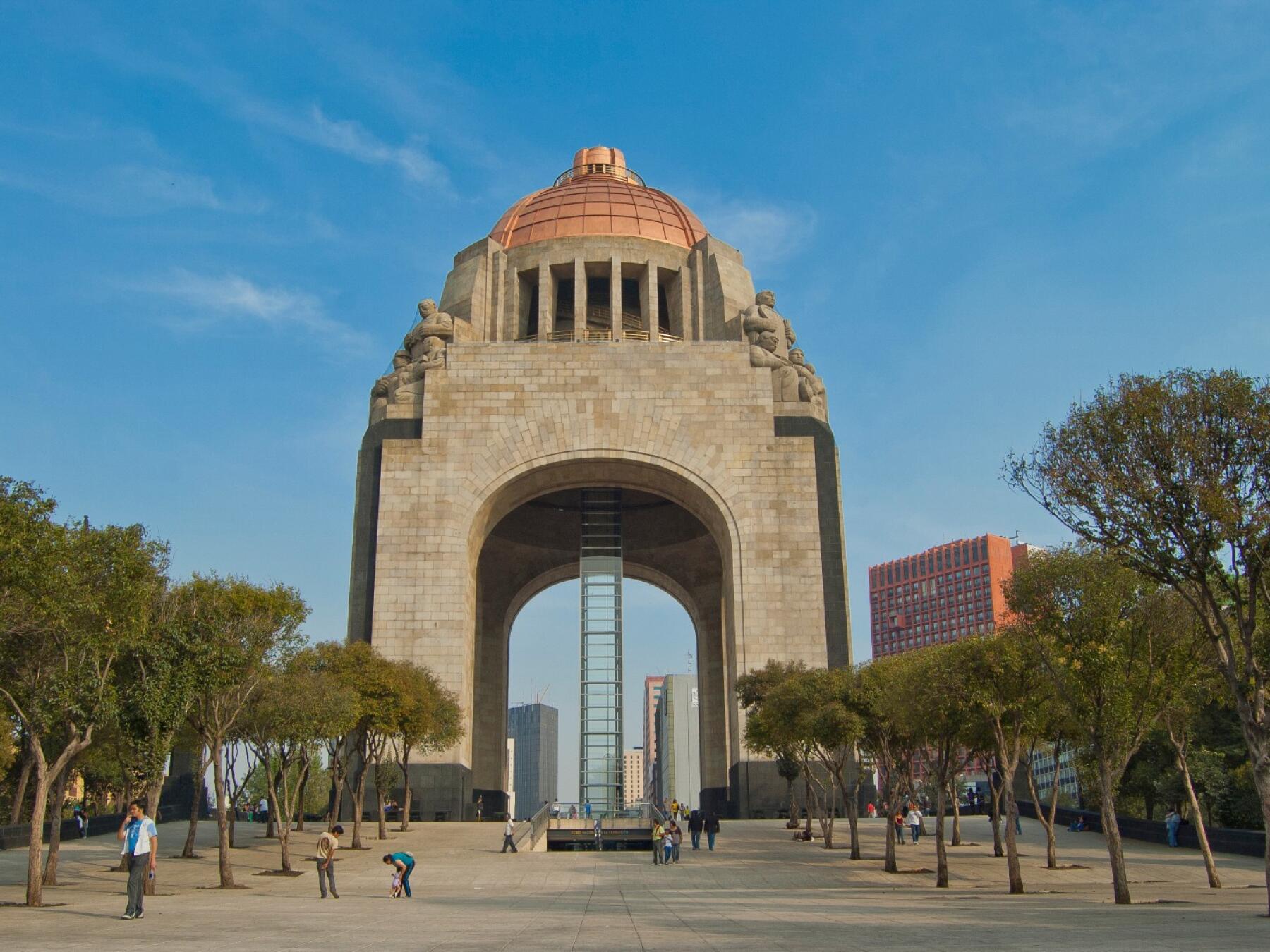
At first glance, it looks like a triumphal arch mixed with a futuristic copper dome… and honestly, that’s not far off. But this monument has one of the strangest origin stories in the city.
Believe it or not, this was never supposed to be a monument at all.
Back in the early 1900s, Mexico’s longtime ruler, Porfirio Díaz, wanted to build an enormous legislative palace here — something grand enough to rival the great government buildings of Europe. Construction began, steel frameworks went up, and the project was meant to symbolize Mexico’s modernization and power.
Then came the Mexican Revolution.
The revolution erupted in 1910, Díaz was overthrown, the country descended into years of conflict, and the giant unfinished palace was abandoned. For a while, this place became a strange metallic skeleton sitting in the middle of the city.
Years later, instead of tearing it down, architects decided to transform the surviving structure into a monument dedicated to the revolution itself. So in a poetic twist, the failed palace of the old regime became a memorial to the movement that helped bring that regime down.
Today, the monument also serves as a mausoleum for several major revolutionary leaders, including Pancho Villa and Venustiano Carranza.
Take a moment to admire the architecture. The massive arch, the art deco details, and the copper-colored dome make it one of the most unique monuments in Mexico City — especially when lit up at night.
The plaza around it has become a lively gathering place filled with locals, protests, festivals, skaters, families, and street food vendors. Which, honestly, feels very appropriate for a monument dedicated to revolution.
And if you’re wondering whether you can go inside — yes, you can. There’s an elevator that takes visitors up into the dome for fantastic panoramic views of Mexico City.
Not a bad reward for surviving a revolution.
Read More
Av. P.º de la Reforma 150, Tabacalera, Cuauhtémoc, 06030 Ciudad de México, CDMX, Mexico
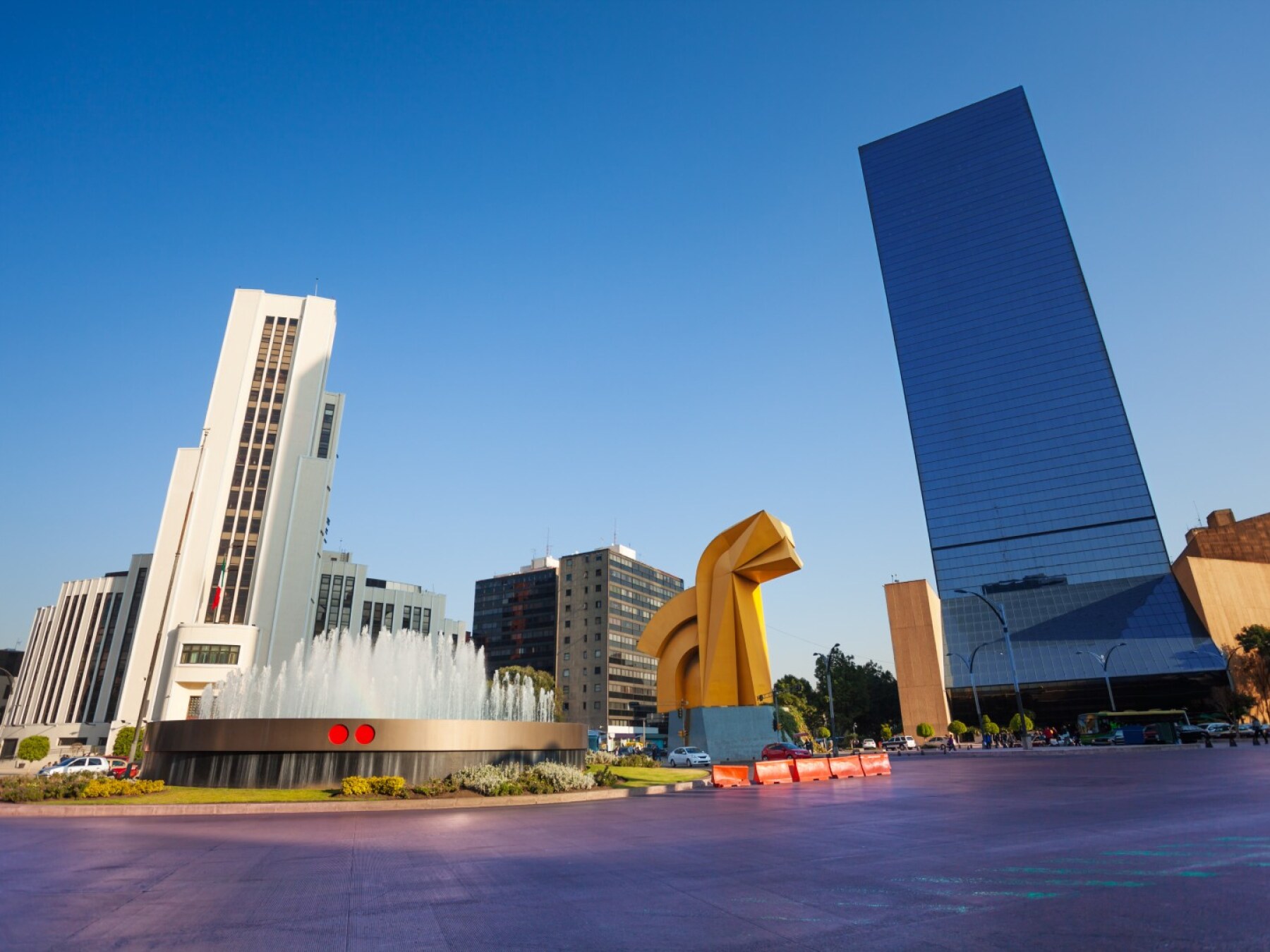
Wide, energetic, and lined with monuments, skyscrapers, hotels, embassies, and historic landmarks, Reforma is Mexico City’s version of the Champs-Élysées in Paris — though with far more traffic, street vendors, and occasional political protests.
The avenue was originally commissioned in the 1860s by Emperor Maximilian I of Mexico. The story goes that Maximilian wanted a grand European-style boulevard connecting the historic city center to Chapultepec Castle, where he lived. At the time, much of the route passed through fields and undeveloped land.
Today, it’s one of the city’s main arteries and a symbol of modern Mexico City.
As you continue walking, notice how Reforma constantly shifts between old and new. Historic monuments stand beside sleek glass towers. Street tacos compete with luxury restaurants. Office workers, tourists, cyclists, and performers all mix together in one nonstop urban flow.
Nearby is the Fountain of the Republic — Fuente de la República — a patriotic monument celebrating the republic and Mexico’s national identity after years of invasions, emperors, and political upheaval during the nineteenth century.
Like many monuments in Mexico City, it’s not just decorative. It reflects the country’s long struggle over what Mexico would become: empire, dictatorship, or republic.
And honestly, Reforma itself tells the same story. Over the decades, this avenue has hosted military parades, massive demonstrations, independence celebrations, marathons, protests, and national victories. If something important happens in Mexico City, chances are it eventually spills onto Reforma.
So as you walk here, you’re not just strolling down a beautiful avenue — you’re walking through the political and cultural heartbeat of modern Mexico.
Read More
Place 1
Monumento a la Revolución: From Failed Palace to Revolutionary Icon
Place 2
Paseo de la Reforma & Fountain of the Republic: Mexico City’s Grand Boulevard
Place 3
Alameda Central: Mexico City’s Historic Urban Oasis
Place 4
Fountain of the Americas: A Symbol at the Heart of Alameda Central
Place 5
Palacio de Bellas Artes: Mexico City’s Cultural Masterpiece
Place 6
Museo Banco de México: Money, Power, and the Story of a Nation
Place 7
Latin American Tower
Place 8
House of Tiles: A Palace Covered in Art
Place 9
Iturbide Palace: From Imperial Residence to Cultural Landmark
Place 10
Metropolitan Cathedral: The Spiritual Heart of Mexico City
Place 11
The Zócalo: The Heart of Mexico
Place 12
National Palace: Power at the Center of Mexico
Place 13
Templo Mayor: The Lost Heart of the Aztec Empire
Place 14
San Ildefonso College: Birthplace of Mexico’s Mural Movement
Place 15
Plaza de Santo Domingo: Ink, Politics, and Old Mexico City
Place 16
Honorable Congress of Mexico City: Where the City Debates Its Future
Place 17
National Art Museum: A Journey Through Mexican Art
Place 18
Main Post Office: Mexico City’s Golden Palace of Communication